
New October 9: Algorithmic Accountability Act Introduced to Congress
Congress officially introduced the Algorithmic Accountability Act on September 29, 2026, marking a pivotal shift in federal oversight of automated systems. This legislation mandates strict transparency and bias mitigation requirements for entities utilizing AI technologies.
Published by
APEX AI Guardrails Editorial Team
October 9, 2026
Reading time
6
minutes
# New October 9: Algorithmic Accountability Act Introduced in Congress to Strengthen AI Fairness
The U.S. Congress officially introduced the Algorithmic Accountability Act on September 29, 2026, representing a definitive move toward federal regulation of automated decision-making. This legislative development creates a national framework that mandates rigorous transparency and bias mitigation standards for both public and private sector AI deployments.
For government IT and compliance leaders, this represents a fundamental shift in how AI-driven services must be audited, documented, and governed to ensure civil rights protections.
How does the Algorithmic Accountability Act change current AI reporting requirements for federal agencies?
The Algorithmic Accountability Act introduces mandatory impact assessments for automated decision-making systems. According to the legislative text, agencies must now document statistical and structural bias mitigation strategies. This mirrors emerging federal requirements like the NIST AI RMF, requiring organizations to maintain evidentiary logs that prove algorithmic fairness to oversight bodies, ensuring that citizens have rights when denied services by machine-learning models.
Legislative Overview and Federal Policy Shifts
The formal introduction of the Algorithmic Accountability Act serves as a cornerstone for modernizing federal AI governance. By establishing federal standards for automated systems, the bill aims to prevent discriminatory outcomes that often plague black-box algorithms used in public services. Policymakers have emphasized that transparency is no longer optional, but a prerequisite for deploying AI in sensitive sectors such as public benefits, healthcare, and criminal justice.
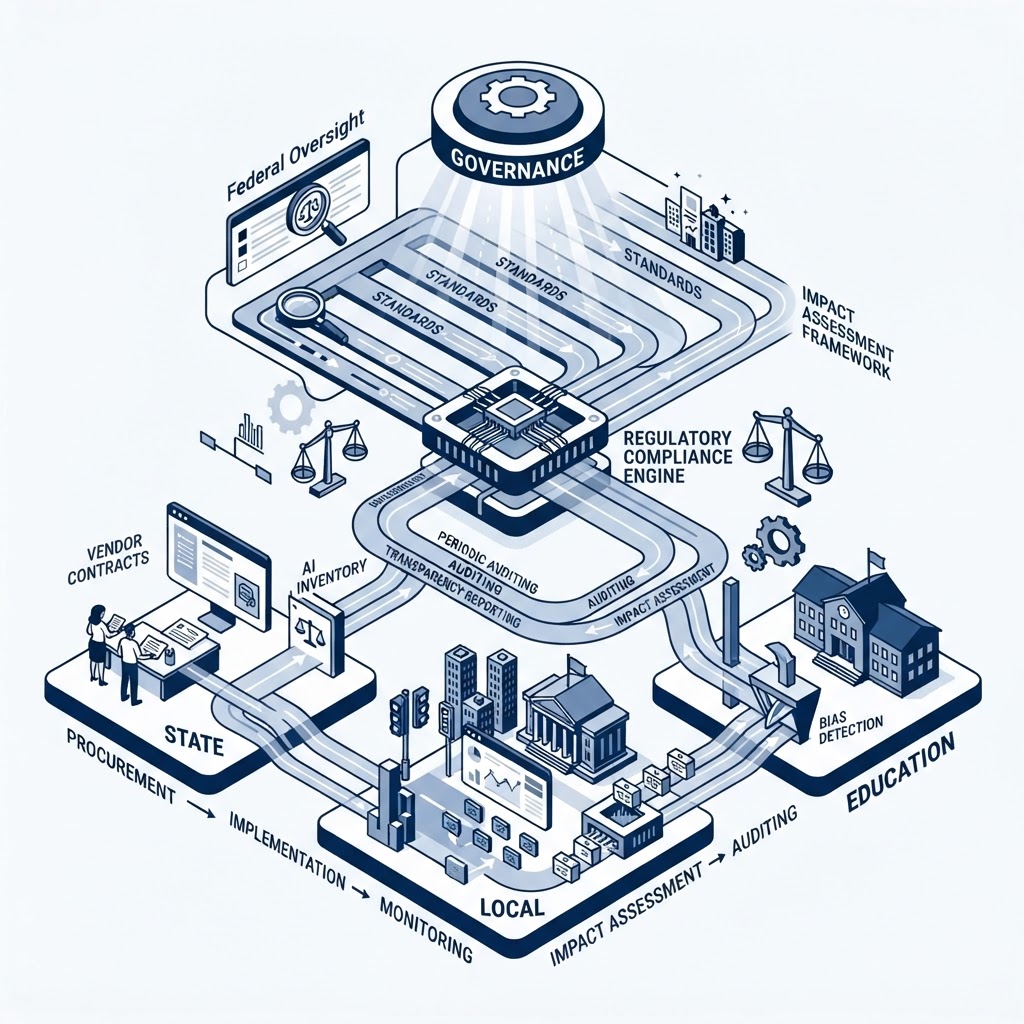
The legislation focuses heavily on the lifecycle of AI products, from initial procurement to operational monitoring, effectively closing gaps where shadow AI has previously thrived without oversight. By aligning with existing frameworks like the NIST AI RMF, the act provides a structured pathway for compliance that emphasizes risk management over mere policy statements. This development follows extensive deliberation on how to balance innovation with public safety.
As noted in the official GovInfo record, the bill mandates specific auditing intervals, ensuring that AI efficacy and fairness are reassessed as data environments shift. This ensures that algorithmic accountability remains a dynamic, ongoing process rather than a static certification event.
What is the required timeline for agencies to conduct an initial AI impact assessment under the new act?
Under the current legislative language, entities are expected to initiate impact assessments during the procurement and deployment planning phases. Agencies must document potential risks to civil rights before full-scale implementation. Organizations should prioritize mapping their existing AI inventory to these new standards, ensuring that vendor contracts include provisions for regular third-party audits and algorithmic transparency reports as required by the proposed accountability benchmarks.
Compliance Implications for SLED and Public Sector Entities
State, Local, and Education (SLED) agencies face unique challenges as they integrate the Algorithmic Accountability Act into their existing AI governance charters. Because many state governments procure AI tools from third-party private vendors, the burden of compliance falls heavily on procurement teams to mandate algorithmic transparency in their contracts. Public sector leaders must now scrutinize vendor documentation for evidence of bias testing, moving beyond surface-level AI acceptable use policies.
Risk exposure is significant; agencies that fail to demonstrate consistent oversight of their automated systems could face both legal challenges and a loss of public trust. Industry experts suggest that the focus on 'algorithmic accountability' necessitates a comprehensive audit of all automated public services. For instance, an automated system used in school district enrollment or municipal tax assessment will now require an auditable trail showing that structural biases have been mitigated.
This requires specialized staff training and the adoption of technical tools designed for AI DLP (Data Loss Prevention) and bias detection. By treating the Algorithmic Accountability Act as a baseline for public sector AI governance, agencies can proactively mitigate the risks of using high-stakes algorithms that influence essential civil rights and individual access to government benefits.
Strategic Impacts for Counties and Municipal Service Agencies
Municipalities and counties are uniquely positioned to benefit from a clear, federal-level mandate that standardizes AI safety practices. Historically, local government agencies have struggled with fragmented approaches to AI procurement, often leading to uneven service delivery and gaps in oversight. This new federal approach encourages a more unified procurement strategy where counties demand transparency from vendors as a non-negotiable requirement.
Furthermore, this regulation prompts local leadership to establish internal AI task forces, ensuring that every automated tool—from traffic management systems to social service eligibility checkers—undergoes the required impact assessments. Agencies should focus on establishing an AI governance charter that clearly defines the roles of data scientists, legal teams, and stakeholders in monitoring model performance. Addressing these policy gaps will require investment in automated monitoring technologies that provide real-time updates on algorithmic output.
Furthermore, staff training programs must be updated to ensure that employees using these systems understand the implications of the legislation, enabling them to flag potential anomalies for further review. By centralizing the management of these systems, counties can turn compliance into a competitive advantage, ensuring that their public-facing AI tools are not only efficient but also equitable and legally defensible against future challenges.
Essential Steps for Government AI Leaders
- →Audit all existing automated decision-making systems to identify potential risks to civil rights. • Integrate rigorous algorithmic transparency clauses into all future technology vendor procurement contracts. • Align internal AI usage guidelines with the federal requirements set forth in the Algorithmic Accountability Act. • Develop an AI impact assessment protocol that tracks statistical bias across all public-facing services. • Mandate periodic, independent auditing of all high-impact algorithms to ensure ongoing compliance with federal safety benchmarks.
What are the primary legal consequences for failing to meet the transparency standards required by the new legislation?
Failure to comply with the mandated algorithmic impact assessments can lead to severe regulatory scrutiny and potential litigation. Agencies that deploy biased or non-transparent systems may be held liable for civil rights violations. Legal teams should expect that non-compliance will invite audits from federal oversight bodies, and in severe cases, the suspension of the automated system until it demonstrates full adherence to the required fairness and documentation standards.
The introduction of the Algorithmic Accountability Act marks a pivotal transition toward a more transparent and legally robust environment for government technology. By prioritizing fairness through verifiable impact assessments, the public sector can effectively mitigate the risks associated with rapid AI deployment. Compliance leaders must act now to integrate these transparency mandates, ensuring their agencies remain ahead of the evolving federal regulatory landscape.
Tagged
About APEX AI Guardrails: We publish expert AI news and governance insights updated 4× daily. Our editorial team consists of retired government IT professionals, AI governance specialists, and compliance experts with deep experience in local government operations.
Related Articles
AI Governance
Mitigating AI Hallucination Risk in Government: New October 19 Federal Oversight Trends
October 19, 2026
AI Governance
Combating AI Deepfake Disinformation: How Government Agencies Can Restore Public Trust as of October 19, 2026
October 19, 2026
AI Governance
New Federal AI Systems Transparency Act Introduced Amid Growing Regulatory Pressure
October 19, 2026