
AI Transparency and Explainability: New UK and California Mandates Reshape Government Decision-Making as of October 16, 2026
Emerging legislative frameworks in California and oversight reports from the UK are forcing government agencies to prioritize algorithmic transparency. These mandates require a shift toward dynamic, explainable AI governance to mitigate risks in public sector decision-making.
Published by
APEX AI Guardrails Editorial Team
October 16, 2026
Reading time
6
minutes
# AI Transparency and Explainability: New UK and California Mandates Reshape Government Decision-Making as of October 16, 2026
As of October 16, 2026, government agencies face urgent requirements to improve AI transparency and explainability to ensure public trust in automated decision-making. Recent reports from the UK House of Commons highlight that current systems often lack the necessary logic trails, leading to biased outcomes in critical service delivery. For SLED IT leaders and compliance officers, these developments signal an end to 'black box' procurement and demand a new focus on documented algorithmic accountability.
How do the latest California laws affect the way government agencies manage AI transparency and explainability?
Governor Gavin Newsom’s recent signing of 13 AI-focused bills directly mandates increased transparency and explicit reporting requirements for automated decision-making systems. These laws establish a new regulatory baseline, requiring state agencies to provide clear disclosures regarding the logic used by AI tools in workplace and public policy environments, ultimately aiming to prevent discriminatory outcomes through stricter oversight and improved accountability standards for vendors and internal IT teams alike.
Addressing the Accountability Gap in Public Sector AI
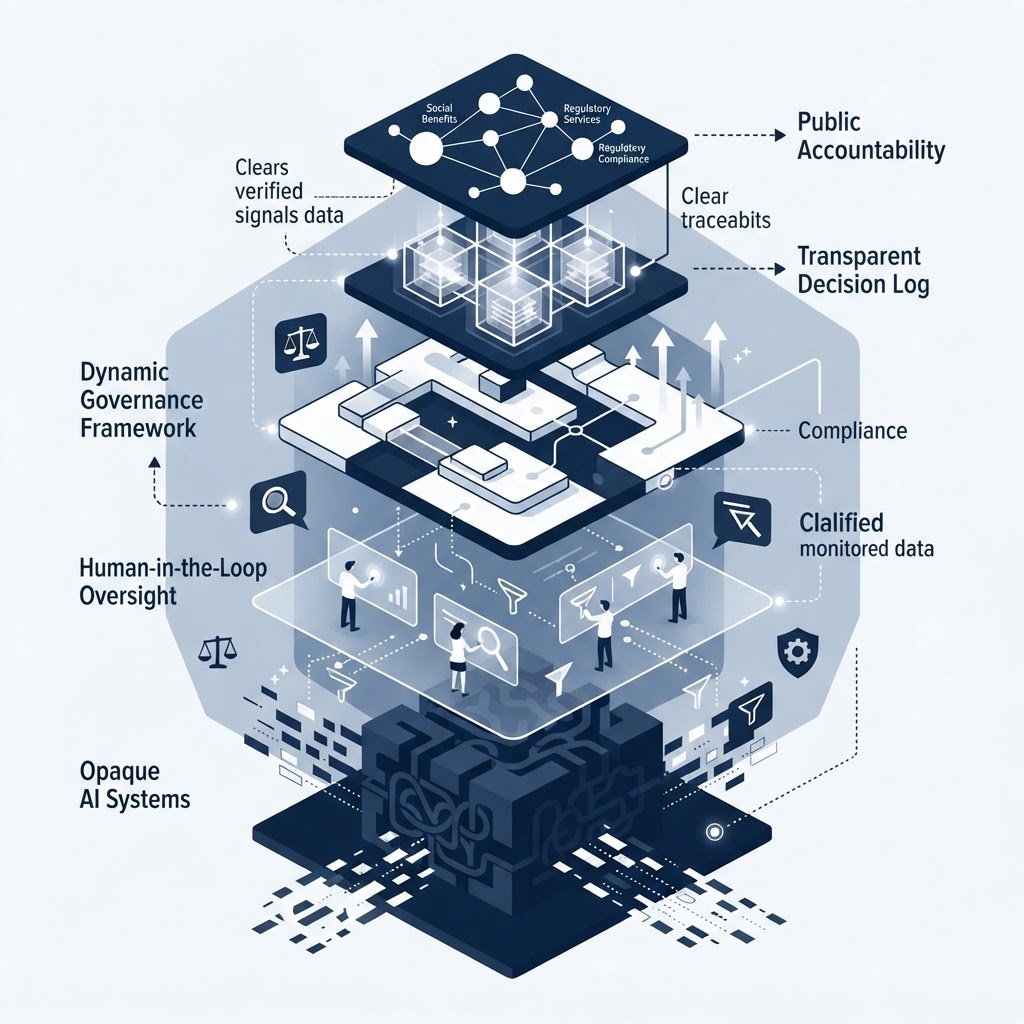
The fundamental challenge facing modern government infrastructure is the growing accountability gap created by opaque AI systems. According to the AI safety report from the House of Commons Library, the lack of explainability in current AI models directly hinders the ability of public officials to hold systems accountable for poor or biased decision-making. When AI agents perform consequential actions—such as processing social benefits or evaluating regulatory compliance—without a human-readable decision log, the agency risks significant legal and ethical exposure.
This research emphasizes that transparency cannot be an afterthought; it must be a structural requirement of the procurement process. If an AI tool cannot justify why it reached a specific conclusion, it is essentially operating outside the bounds of traditional administrative law. To close this gap, agencies must prioritize models that support 'human-in-the-loop' oversight, ensuring that staff can interpret and, if necessary, override machine-generated recommendations before they are finalized.
The UK report underscores that as these systems become more autonomous, the reliance on unexplainable code becomes a critical failure point in public sector operations that requires immediate policy intervention.
What is the most effective approach for an agency to transition away from static AI policy documents?
Agencies should move toward dynamic, web-based governance frameworks that undergo iterative updates to match the rapid evolution of AI technology. As noted in guidance from EdCircuit regarding school AI policies, moving to living, digital documents allows departments to adjust for bias, privacy, and emerging model risks in real-time, replacing stagnant, paper-based policies that fail to address modern algorithmic complexities.
Legislative Shifts and Mandatory Disclosure Trends
The legislative landscape is shifting rapidly, with California’s package of 13 AI laws serving as a blueprint for other states to follow. These laws focus heavily on the intersection of privacy, security, and automated decision-making, specifically requiring organizations to be transparent about how data is used to influence outcomes. For government procurement, this means that vendors can no longer hide behind proprietary 'black box' defenses when bidding on public contracts.
Compliance teams must now mandate that vendors provide detailed impact assessments and clear documentation of training data to prove the system does not produce discriminatory results. This shift mirrors the principles found in the NIST AI Risk Management Framework, which encourages agencies to map, measure, and manage the risks associated with AI transparency and explainability. By mandating disclosure, California is setting a precedent that requires government IT leaders to verify not just the capability of a software tool, but the ethical and technical stability of its decision-making processes.
Agencies that fail to integrate these requirements into their RFP processes will likely find themselves non-compliant with emerging state and federal standards, exposing them to legal challenges and loss of public confidence.
Practical Strategies for Municipal and State Agency Deployment
For counties and municipalities, the transition to responsible AI requires a fundamental rethink of procurement and vendor management. Agencies should begin by auditing existing AI tools to identify where shadow AI or undocumented models may be creating hidden risks. It is vital to establish an AI governance charter that defines clear roles for human oversight, ensuring that every automated decision has an identifiable human monitor.
Furthermore, procurement teams must adopt a 'trust but verify' approach, demanding transparency reports from technology providers that specifically detail how their algorithms handle bias and explainability. Training staff is another critical component; employees must understand the limitations of the tools they use and recognize the signs of algorithmic drift. By moving toward the dynamic policies discussed in recent education technology analysis, agencies can remain resilient in the face of rapid technological change.
The goal is to build an environment where AI acts as a transparent support for human judgment rather than a replacement for it. Taking these steps today allows local government agencies to stay ahead of the regulatory curve while protecting the rights of the citizens they serve.
Steps for Advancing AI Transparency and Explainability
- →Audit all existing AI and machine learning deployments for transparency gaps and explainability limitations. • Incorporate mandatory vendor disclosure requirements for training data and decision logic into all future RFP documentation. • Transition from static, annual AI policy updates to living, web-based governance frameworks that allow for iterative improvements. • Establish a mandatory human-in-the-loop protocol for all high-stakes decision-making scenarios where AI outputs influence public service delivery. • Implement regular algorithmic bias testing and publish findings to maintain the public trust and meet state-level reporting mandates.
What are the primary consequences for a SLED agency that fails to address transparency in its AI procurement strategy?
Failure to address transparency risks catastrophic loss of public trust, potential litigation due to discriminatory outcomes, and regulatory non-compliance with state mandates like those recently signed in California. Agencies may also face costly 'rip and replace' mandates if deployed tools cannot meet future state-level explainability standards, as well as being vulnerable to security breaches if their AI tools lack the necessary audit logs required by federal frameworks.
Prioritizing AI transparency and explainability is now a mandatory standard for government agencies looking to leverage emerging technologies safely. As legislative bodies refine their oversight, leaders must pivot to dynamic, transparent, and human-centric governance models. Compliance officers who act now to document and verify their AI decision-making chains will secure their agency’s future against both regulatory scrutiny and systemic risk.
Tagged
About APEX AI Guardrails: We publish expert AI news and governance insights updated 4× daily. Our editorial team consists of retired government IT professionals, AI governance specialists, and compliance experts with deep experience in local government operations.
Related Articles
AI Governance
Mitigating AI Hallucination Risk in Government: New October 19 Federal Oversight Trends
October 19, 2026
AI Governance
Combating AI Deepfake Disinformation: How Government Agencies Can Restore Public Trust as of October 19, 2026
October 19, 2026
AI Governance
New Federal AI Systems Transparency Act Introduced Amid Growing Regulatory Pressure
October 19, 2026