
AI Deepfake Disinformation: How Governments Are Racing to Protect Public Trust This October 18
As authoritarian actors pivot to AI-powered cognitive warfare, government agencies are implementing advanced verification strategies to defend election integrity. New initiatives focus on detecting synthetic media and securing public trust against sophisticated deepfake disinformation campaigns.
Published by
APEX AI Guardrails Editorial Team
October 18, 2026
Reading time
6
minutes
State authorities are aggressively combatting AI deepfake disinformation as authoritarian actors deploy synthetic media and bot networks to influence the ongoing Taipei mayoral election. Officials recently confirmed that traditional political influence tactics are being replaced by sophisticated cognitive warfare operations designed to erode voter confidence in real-time. For SLED IT and compliance leaders, this shift necessitates an immediate upgrade to incident response frameworks and authentication protocols to safeguard democratic legitimacy.
How are foreign entities currently using AI deepfake disinformation to interfere in the 2026 Taipei mayoral election?
Foreign actors are employing deepfake videos and automated bot accounts to conduct cognitive warfare against the electoral process. By generating synthetic content that targets specific candidates, these campaigns aim to manipulate public perception and sow discord. According to recent reports, these tactics mark a strategic shift away from traditional influence operations toward technology-driven disruption, forcing local authorities to prioritize rapid media verification and digital defense mechanisms to maintain the integrity of the voting process.
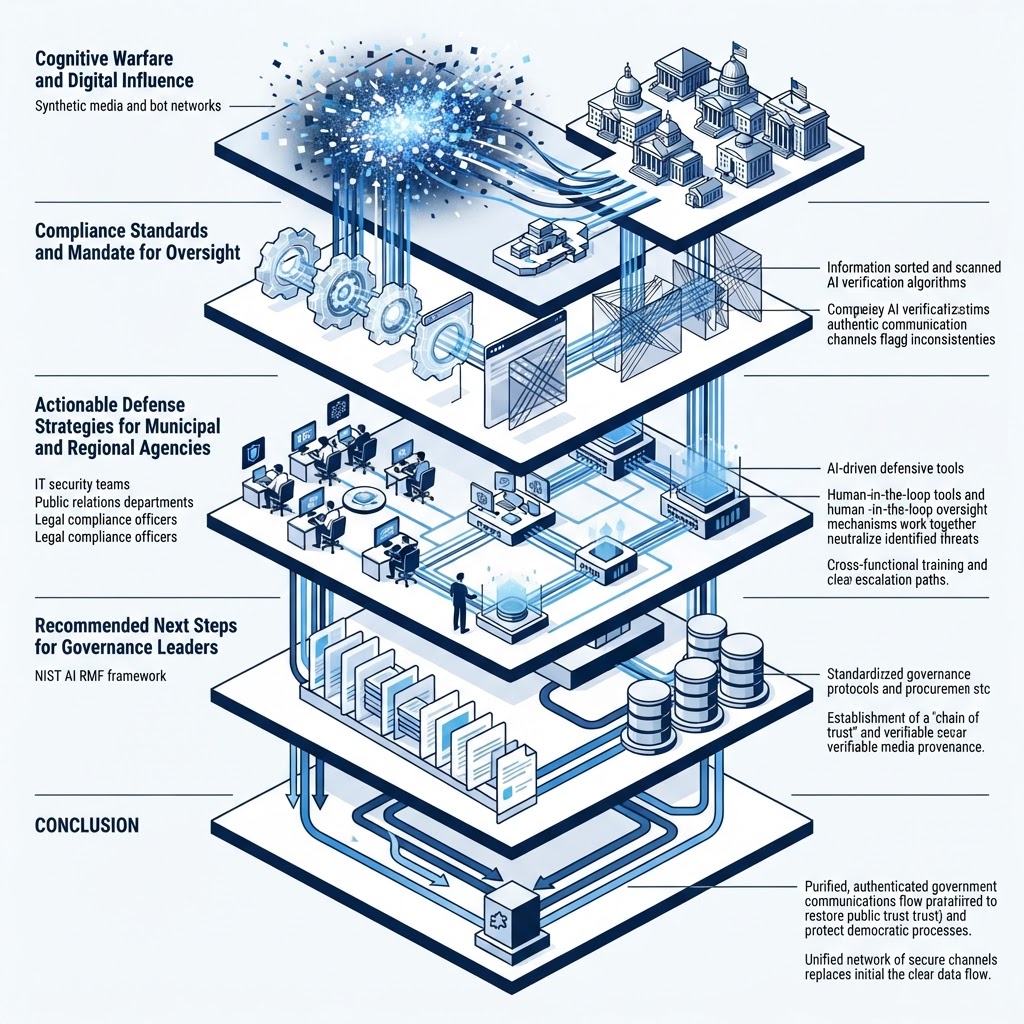
The Evolution of Cognitive Warfare and Digital Influence
The threat landscape has shifted from localized propaganda to industrialized AI deepfake disinformation, creating a significant challenge for public institutions. Authorities warn that these state-sponsored operations prioritize high-quality synthetic media to discredit political figures, making it increasingly difficult for the average citizen to distinguish between authentic footage and AI-generated deception Official warns of Chinese disinformation campaign to influence Taipei election - Taipei Times. As these operations scale, the burden of attribution falls on government intelligence agencies, which must now operate at the speed of viral social media cycles.
Agencies are finding that traditional manual verification is no longer sufficient to counter bot networks designed to amplify misinformation before a rebuttal can even be drafted. By focusing on identifying the underlying patterns of synthetic content, security teams are attempting to build more resilient response infrastructures. This transition necessitates a departure from reactive crisis management toward proactive, algorithm-aware defensive strategies China suspected of planning disinformation campaign to influence Taipei mayoral election.
Integrating the NIST AI Risk Management Framework (RMF) allows departments to categorize these threats systematically, ensuring that potential synthetic media campaigns are addressed through formal governance structures rather than ad-hoc departmental responses.
What is the most effective approach for public sector IT teams to mitigate the impact of AI-generated misinformation?
Agencies should leverage AI-driven detection tools to identify synthetic content before it proliferates across social networks. By integrating these automated solutions with clear public communication strategies, governments can verify authentic information while flagging malicious AI deepfake disinformation. Research confirms that AI-based defense mechanisms serve as an effective, scalable barrier against coordinated influence operations, provided that these tools are implemented within a broader, multi-agency incident response framework that emphasizes transparency and public awareness.
Compliance Standards and the Mandate for Oversight
The push for comprehensive oversight regarding AI deepfake disinformation has moved beyond theoretical debate into active legislative consideration. As public demand for accountability rises, officials are being tasked with establishing clear boundaries for synthetic content creation and dissemination Letters for Oct. 15: Government should control AI’s powerful technology - The Virginian-Pilot. This regulatory momentum often highlights the tension between necessary digital defense and the constitutional protection of free speech.
Compliance teams are advised to align their current policies with emerging NIST guidelines, specifically focusing on transparency and algorithmic accountability. By documenting the provenance of all official agency communications, departments can create a "chain of trust" that makes unauthorized deepfakes easier to debunk. Furthermore, procurement offices are increasingly scrutinizing vendor software for built-in watermarking and metadata verification capabilities.
This focus on verifiable media is a critical component of a robust AI acceptable use policy. As agencies prepare for future election cycles, the ability to rapidly certify content as authentic will serve as a foundational element of public sector resilience. Organizations that adopt an AI governance charter today will find themselves better positioned to withstand the pressures of increasingly sophisticated synthetic disinformation tactics in the coming years.
Actionable Defense Strategies for Municipal and Regional Agencies
Municipal agencies and regional entities must prioritize the implementation of "AI-aware" leadership models to combat the rising tide of AI deepfake disinformation. This begins with the procurement process, where IT leaders should mandate that all third-party software used for public dissemination includes advanced tamper-detection features. Agencies should also look to cross-functional training initiatives that bring together PR teams and cybersecurity experts to recognize the common artifacts of synthetic media.
Implementing a clear escalation path for when suspicious content is detected is essential for preventing the rapid spread of election-related misinformation. Furthermore, agencies should establish partnerships with local fact-checking coalitions, as recent studies indicate that AI-driven defensive tools are highly effective when paired with human-in-the-loop oversight Using AI to fight election misinformation works, WashU research finds | Newswise. By creating a standard operating procedure for reporting disinformation to major social media platforms, local governments can exert greater influence over the digital environment.
These steps not only improve organizational posture but also build public trust, showing citizens that the government is prepared to defend the information landscape. Ensuring that all AI deployments remain within the scope of documented acceptable use policies prevents "shadow AI" from creating new, unmonitored attack vectors for malicious actors to exploit.
Recommended Next Steps for Governance Leaders
- →Audit existing public-facing communication channels for vulnerabilities to synthetic media injection. • Adopt the NIST AI RMF to standardize the identification and categorization of AI deepfake disinformation risks. • Update agency procurement requirements to include mandatory watermarking and metadata provenance for all official digital assets. • Conduct cross-departmental drills focused on responding to coordinated, AI-driven influence operations. • Establish a dedicated task force to bridge the gap between IT security, public relations, and legal compliance.
What are the primary consequences of failing to detect and address AI deepfake disinformation within government communications?
Failure to address AI deepfake disinformation leads to the erosion of public trust, the destabilization of democratic processes, and potential legal challenges regarding information accuracy. Organizations that lack adequate verification protocols risk having their official channels hijacked to spread harmful misinformation. This exposes agencies to significant reputational damage and requires costly remediation efforts to restore public confidence, highlighting the urgent need for robust, proactive media authentication frameworks in every government agency.
Addressing the threat of AI deepfake disinformation is no longer optional for government entities tasked with maintaining the integrity of public information. Leaders must now balance rapid technological adoption with strict governance and verification standards to protect democratic processes from cognitive warfare. By proactively managing AI risks, agencies can ensure that digital innovation supports—rather than compromises—the trust required for effective public service.
Sources
- Official warns of Chinese disinformation campaign to influence Taipei election - Taipei Times
- China suspected of planning disinformation campaign to influence Taipei mayoral election
- Letters for Oct. 15: Government should control AI’s powerful technology - The Virginian-Pilot
- Using AI to fight election misinformation works, WashU research finds | Newswise
Tagged
About APEX AI Guardrails: We publish expert AI news and governance insights updated 4× daily. Our editorial team consists of retired government IT professionals, AI governance specialists, and compliance experts with deep experience in local government operations.
Related Articles
AI Governance
Mitigating AI Hallucination Risk in Government: New October 19 Federal Oversight Trends
October 19, 2026
AI Governance
Combating AI Deepfake Disinformation: How Government Agencies Can Restore Public Trust as of October 19, 2026
October 19, 2026
AI Governance
New Federal AI Systems Transparency Act Introduced Amid Growing Regulatory Pressure
October 19, 2026