
NIST AI Risk Management Framework: New 2026 Federal Mandates for Government Agencies
Bipartisan federal legislation and updated NIST guidelines are transforming the AI RMF from voluntary guidance into a mandatory compliance standard for all government agencies by late 2026.
Published by
APEX AI Guardrails Editorial Team
August 18, 2026
Reading time
7
minutes
The NIST AI Risk Management Framework is transitioning from a voluntary guide to a core federal mandate following new bipartisan legislation introduced in the U.S. House of Representatives. Led by Representatives Ted Lieu, Zach Nunn, and Don Beyer, this bill requires all federal agencies to develop internal guidelines that align with the framework’s core functions of Govern, Map, Measure, and Manage.
This regulatory shift forces a significant change in how government IT leaders approach algorithmic accountability and procurement compliance as we move into the latter half of 2026.
Which specific federal legislation is now requiring agencies to adopt the NIST AI Risk Management Framework in 2026?
Bipartisan legislation introduced by Representatives Ted Lieu, Zach Nunn, and Don Beyer mandates that federal agencies develop internal guidelines based on the NIST AI Risk Management Framework. This bill transitions the framework from a voluntary resource to a compulsory standard, requiring agencies to formally map their artificial intelligence deployments to the NIST core functions of Govern, Map, Measure, and Manage to ensure national algorithmic accountability and responsible AI use.
Bipartisan Mandates and the August 2026 NIST AI Risk Management Framework Legislative Shift

The landscape of federal AI adoption has reached a critical inflection point as the U.S. House of Representatives moves to codify AI safety standards. According to recent reports, Federal agencies would use NIST’s AI guidelines under bipartisan House bill, establishing a clear legal requirement for agencies to adopt the NIST AI Risk Management Framework.
This legislative push is designed to move beyond mere experimentation, forcing agencies to implement an AI governance charter that dictates how models are vetted before they touch public data. The bill is a direct response to the Treasury Department's February 2026 release of sector-specific guidance, which demonstrated that voluntary compliance was insufficient for the scale of current generative AI deployment. By mandating the NIST standards, the government aims to eliminate "shadow AI" within departments and ensure that every automated decision-making system undergoes a rigorous risk assessment.
This includes a heavy focus on AI transparency, requiring agencies to disclose when and how AI is used in public-facing services. The bill also emphasizes procurement compliance, ensuring that third-party vendors selling AI software to the government meet the same high standards for safety and ethics defined by NIST.
When was the NIST AI RMF Playbook last updated to include generative AI and decommissioning guidance?
The NIST AI RMF Playbook (Last Verified August 11, 2026) was officially verified for current accuracy on August 11, 2026, to provide agencies with suggested actions regarding generative AI risks. Furthermore, an updated standards review on August 12, 2026, introduced a structured approach for the decommissioning phase of the AI lifecycle, helping agencies manage the secure and ethical retirement of legacy algorithmic systems.
Updated Playbook Protocols and Lifecycle Decommissioning Standards
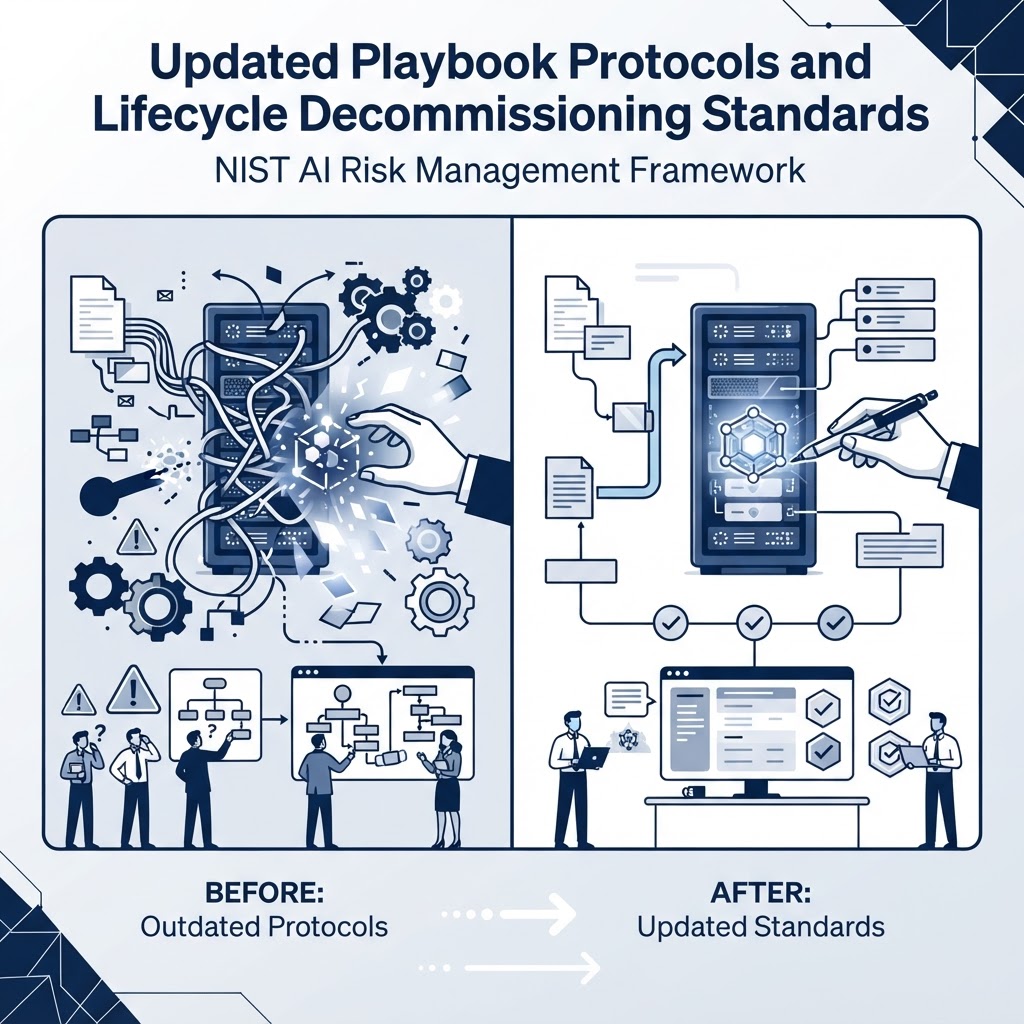
On August 11, 2026, NIST provided a critical update to the ecosystem by verifying the NIST AI RMF Playbook (Last Verified August 11, 2026), ensuring that the document's "suggested actions" are optimized for the latest generative AI threats. This update is particularly vital for IT professionals managing AI DLP (Data Loss Prevention) strategies, as it addresses emerging prompt injection vulnerabilities and data privacy exposure. Parallel to this, a new focus has emerged regarding the end of the AI lifecycle.
The NIST AI RMF — Artificial Intelligence Risk Management Framework Standards Update, published on August 12, 2026, highlights a structured approach for decommissioning AI systems. This is a significant shift for 2026, as many early-pilot AI systems are now reaching the end of their useful life. Agencies must now have a plan for removing model weights, securing training data, and managing software dependencies to prevent residual security risks.
To further refine these standards, NIST has updated its AI Risk Management Framework - Engage | NIST portal as of August 13, 2026, soliciting implementation data from agencies to inform the first major revision of the framework. This ensures that the framework evolves alongside real-world agency performance and technical challenges.
Operationalizing New Standards for AI Agent Interoperability and Municipal Infrastructure
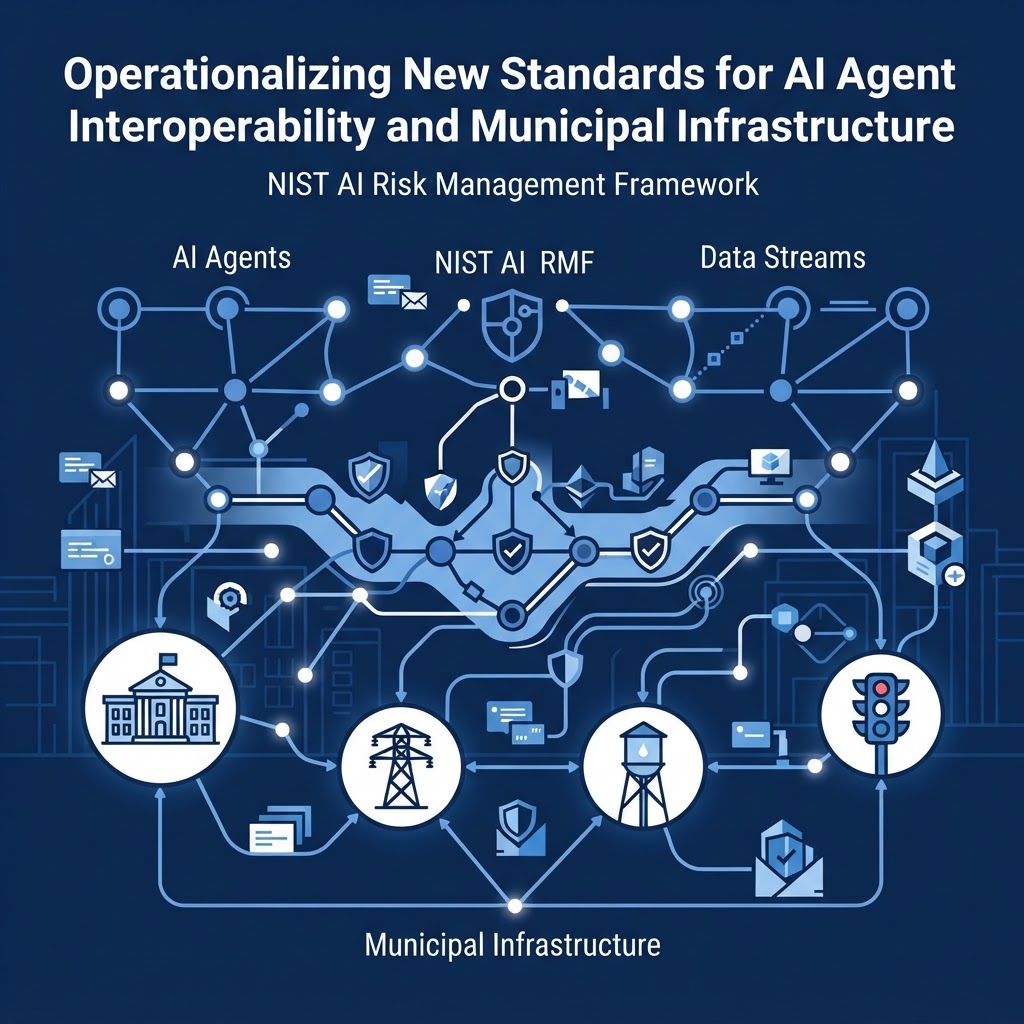
As we look toward the end of 2026, the NIST AI Risk Management Framework is expanding to cover increasingly autonomous systems. Industry experts anticipate a new AI Agent Interoperability Profile in Q4 2026, which will specifically address the risks of autonomous agents operating within government workflows. For state and local (SLED) leaders, this development is crucial as they integrate AI into utilities, transportation, and emergency response.
Many municipalities are already adopting the NIST framework to align with federal grant requirements, ensuring that their AI acceptable use policy is compatible with national standards. The transition to a mandatory federal framework means that local governments must also upgrade their technical capacity to handle responsible AI monitoring. Leaders at the county level are focusing on capacity building, training staff to move from "governance-on-paper" to active risk measurement in production environments.
This includes setting up real-time monitoring for bias and drift in algorithmic decision-making. By utilizing the updated August 2026 Playbook, these organizations can establish a defensible compliance posture that meets both state-level transparency laws and new federal oversight requirements, protecting citizens from the unintended consequences of unmanaged automation.
Strategic Roadmap for Maintaining NIST AI Risk Management Framework Compliance
- →Ensure all internal guidelines formally map to the four core NIST functions: Govern, Map, Measure, and Manage, as required by the 2026 bipartisan House bill.
- →Review the NIST AI RMF Playbook (Last Verified August 11, 2026) to update suggested actions for generative AI and LLM security.
- →Implement the new decommissioning standards released on August 12, 2026, to manage the secure retirement of legacy AI models and datasets.
- →Prepare for the Q4 2026 release of the AI Agent Interoperability Profile if your agency utilizes autonomous bots for permit processing or public inquiries.
- →Submit implementation data via the NIST Engagement Portal to influence the upcoming major revision of the Framework.
- →Audit all third-party vendors for procurement compliance to ensure external tools meet the trustworthiness standards defined in the August 2026 updates.
What are the primary risks associated with failing to follow the NIST AI Risk Management Framework for federal autonomous agents?
Agencies failing to follow the NIST AI Risk Management Framework face significant risks, including prompt injection, data privacy exposure, and a lack of interoperability. With the upcoming AI Agent Interoperability Profile in Q4 2026, non-compliant systems may be barred from federal procurement due to safety concerns. Beyond security, legal exposure regarding algorithmic bias and the loss of public trust serve as critical consequences for bypassing these standardized safety controls.
The evolution of the NIST AI Risk Management Framework into a mandatory federal standard marks a turning point for government technological sovereignty and public safety. As agencies move from governance-on-paper to active risk measurement, the August 2026 updates provide a necessary roadmap for secure and responsible AI deployment. Compliance leaders must act now to integrate these protocols into their operational DNA or risk significant regulatory friction in the coming fiscal year.
Sources
- NIST AI RMF Playbook (Last Verified August 11, 2026)
- AI Risk Management Framework - Engage | NIST
- NIST AI RMF — Artificial Intelligence Risk Management Framework Standards Update
- NIST AI RMF Explained: Functions, Playbook & Compliance
- Federal agencies would use NIST’s AI guidelines under bipartisan House bill
Tagged
About APEX AI Guardrails: We publish expert AI news and governance insights updated 4× daily. Our editorial team consists of retired government IT professionals, AI governance specialists, and compliance experts with deep experience in local government operations.
Related Articles
Government AI
AI Hallucination Risk Governance in SLED: September 4 Disciplinary Actions and New Deployer Liability
September 4, 2026
AI Governance
AI Deepfake Disinformation Threats: Global Governments Ramp Up Oversight in September 2026
September 4, 2026
Government AI
AI Transparency Government Decision Making: California Passes 30 Oversight Bills Ahead of September Deadline
September 4, 2026